Kids Scuba Diving in Hurghada — How Young is Too Young?
Everything parents need to know about certifying kids in the Red Sea. Age requirements, course types, safety practices, and how to know if your child is ready.
Kids can scuba dive earlier than you think
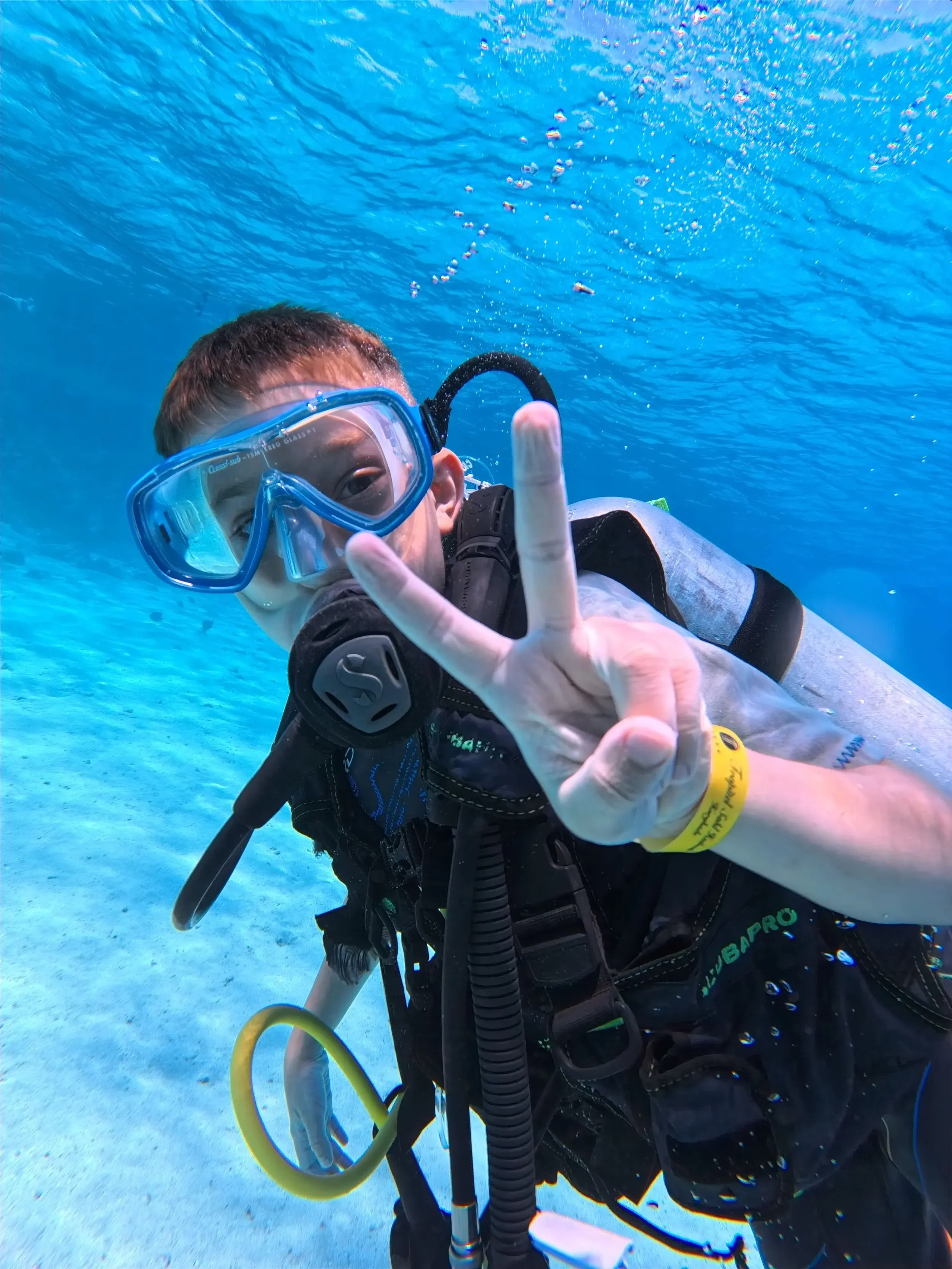
The minimum age for junior scuba diving is 8 years old — and yes, this is safe. PADI, SSI, and SDI all certify children as young as 8 in controlled conditions. At DiveRED, we've successfully trained children from 8 to 17, and the experience is consistently life-changing. Kids are often better students than adults: they're less fearful, more curious, and less likely to overthink the equipment. The key is matching the program to the child's maturity level, not just their age.
Age-appropriate courses: what each level means
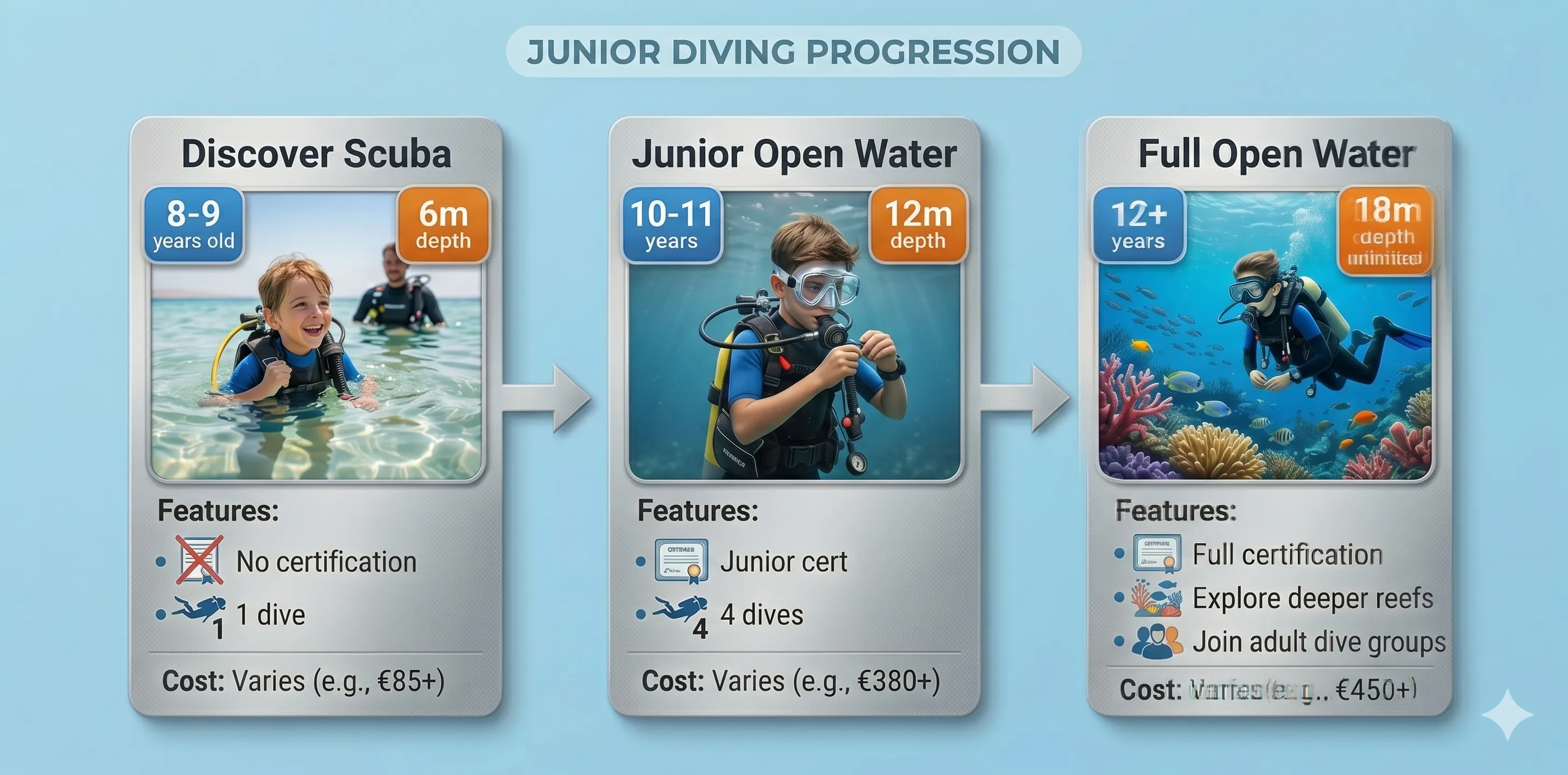
The course your child takes depends on age and maturity. Discover Scuba (ages 8-9, single dive in shallow water) is an intro experience where kids learn basics but don't get a certification. Junior Open Water (ages 10-11, four training dives) earns a full certification but with depth limits: junior certifications allow diving to 12 meters with a professional guide, while adult Open Water allows 18 meters with a buddy. At 12 years old, kids can earn a full unrestricted Open Water certification if they pass the standard course. The progression makes sense: younger kids get supervised dives, older kids get independence.
Maturity matters more than age
A physically small but emotionally mature 10-year-old will learn faster than a large but anxious 12-year-old. Before booking, consider: Can your child follow detailed instructions? Can they stay calm when uncomfortable? Do they have the focus to learn new skills? Can they communicate needs effectively (not just with words, but with basic hand signals)? These traits matter far more than height or age. We'll do a pre-course chat with your child — if we have doubts about readiness, we'll tell you. It's not a pass/fail; it's about setting them up for success.
Safety practices for junior divers
Kids never dive alone. They either dive with a parent (if the parent is a certified diver) or with a professional guide. The buddy system is strict: the guide stays arm's-length away at all times. We limit depth based on age (junior divers don't go deep), keep dives short (30 minutes max for younger kids), and choose sites with minimal current and excellent visibility. Equipment is scaled to fit — kids use smaller regulators, BCDs designed for pediatric bodies, and custom weight distributions. The reefs we dive are shallow (5-12 meters), protected, and swarming with life. It's genuinely safer than many land activities kids do daily.
Common parent worries, addressed
Will they panic? Unlikely. Panicking requires a sense of catastrophe — most kids don't have that. They get uncomfortable, sure, but genuine panic is rare in supervised conditions with a calm instructor. How do they equalize ear pressure? They learn in shallow water first. If a child can chew gum and yawn on land, they can equalize underwater — we teach the technique and practice it. What if they hate it? That's fine. A single dive is a low-commitment way to try. Some kids love it immediately; others need time. What if they get cold? We have kids' wetsuits in multiple sizes. What about the instructor's communication? We use hand signals that are simple and intuitive. Kids learn them in 10 minutes.
What kids remember
Years later, former junior students tell us: 'I remember the feeling of floating,' 'the colors of the fish,' 'being so calm and weightless,' 'how my dad was right there with me.' Kids don't remember the mechanics — they remember the wonder. For many, a first dive at age 10 becomes a defining memory, a moment where they realized something profound about themselves and the natural world. That's the real value.
After certification: what's next?
A certified junior diver can join family dives, take specialty courses (nitrox, navigation, naturalist), or transition to adult certification at 12. Many families make diving an annual tradition — kids look forward to the trip and to diving with parents or guides they've trained with before. Some kids go on to compete in underwater orienteering or pursue diving as a serious hobby. Others do it occasionally for family adventures. The point is: certification opens doors.
More from the blog
 training
 Beginner's Guide to Diving Hurghada in 2026
Everything a first-time diver needs to know about getting certified in the Egyptian Red Sea — from cost to course choice to what to expect on day one.
 training
 PADI vs SSI vs SDI — Which Diving Certification Should You Get?
Unbiased comparison of the three major diving agencies. Curriculum, recognition, teaching style, and which is best for you.