Private Diving vs Group Dives in Hurghada — Which Should You Choose?
Full comparison of private dives and group trips in the Red Sea. Cost, benefits, when each makes sense, and how to get the most from either option.
The choice: private dives vs group trips
When you book a dive in Hurghada, you have two basic options: join a group dive (typically 4-8 divers per boat) or book a private dive (just you, your buddy, and a guide). The difference is more than just logistics — it changes the entire experience. Neither is objectively 'better'; they suit different people and goals. Here's how to choose.
Group dives: the social experience
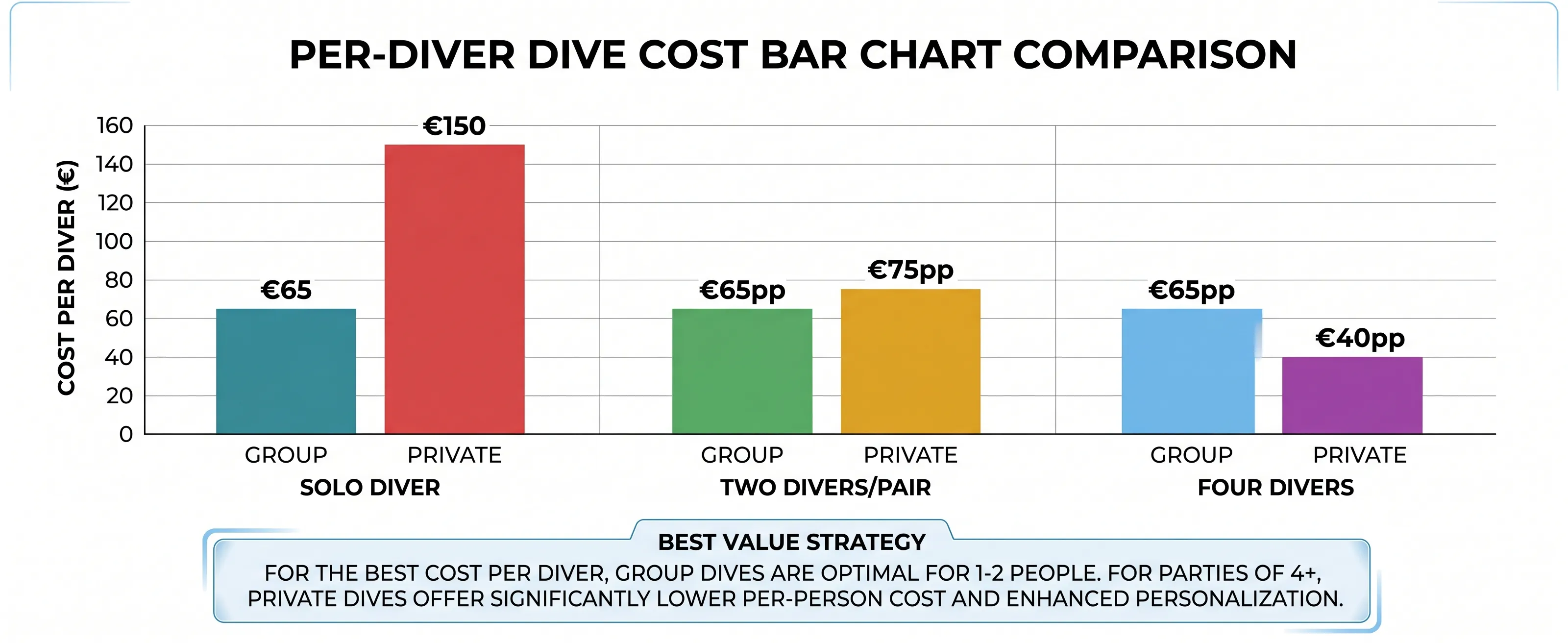
A group dive puts you on a boat with 4-8 other divers, typically ranging from first-timers to experienced. The guide leads the group along a predetermined route, making stops at known fish hangouts and coral formations. The advantage is camaraderie — you meet other divers, swap stories between dives, and often make friends who become dive buddies long-term. Group dives are cheaper (€55-70 per dive) because the guide and boat costs are shared. They follow proven routes to reliable spots, so you see consistent marine life. The downside: you move at the slowest diver's pace, you can't deviate from the planned route, and if you're an experienced diver, the pace might feel leisurely. Group dives are perfect for beginners who want the social element, mid-level divers happy to enjoy the standard sites, and anyone on a budget.
Private dives: complete control
A private dive is just you (plus your buddy if you have one), your guide, and the boat. You decide the route, depth, pace, and focus. Want to spend 20 minutes with a single octopus? You can. Want to explore a cave or overhang? The guide will assess whether it's safe and take you there. Want to practice new skills or photography? The guide's full attention is on you. Private dives cost more (€120-180 depending on boat size and duration) because you're paying for the guide and boat without splitting costs. But you get customization, pacing tailored to your level, and undivided attention for learning or specialized interests.
Cost breakdown: is private worth it?
Group dive: €55-70 per person. Private dive: €120-180 for the entire dive (which means if you have a friend, you're splitting the cost — €60-90 each). So a private dive for two isn't much more expensive than a group dive, and you get major benefits. For solo divers, private is pricier but still justified if you want personalized instruction or have specific interests (macro photography, coral study, navigation practice). For a couple or small group, private is often better value than paying group prices for each person while getting none of the customization.
Which is right for your certification level?
Just certified (Open Water, 0-20 dives): Group dives are ideal. You benefit from seeing other divers, the relaxed pace, and the lower pressure. Having more experienced divers on the boat is reassuring. Intermediate (20-100 dives): Either works. Group dives keep you engaged with reef knowledge; private dives let you refine skills. Advanced (100+ dives): Private dives often feel better because the pace and complexity can match your level. Group dives can feel slow if you're looking for challenge or specialized exploration.
Special cases where private makes sense
Teaching your non-diving partner: Frustrating in a group, perfect in private — the guide can focus on your partner's pacing while keeping you entertained. Specialty training (nitrox, deep dives, navigation): Private allows the guide to teach rather than just lead. Photography: You set the pace, the guide knows your interests. Technical exploration: Caves, wrecks, deep sites — private dives allow careful, paced exploration. Phobia or anxiety: Private is lower-pressure while you rebuild confidence. Advanced certifications: Night diving, deep diving, wreck diving — often best learned privately.
Tips for getting the best experience in each
In group dives: arrive early, chat with other divers, ask your guide questions before the dive, stay close to the guide so you see what they're pointing out, be aware of everyone's comfort level so you can stick together. In private dives: communicate your goals clearly (relaxed exploration vs. technical challenge vs. photography), ask the guide for their local knowledge, be willing to follow their safety recommendations, prepare specific questions or skills you want to focus on.
One final thought
The 'best' dive isn't about private vs. group — it's about matching the dive type to your current level, goals, and mood. A beginning diver on a group dive with friendly divers might have a transformative experience. An advanced diver on a solo private dive might feel isolated. Think about what you actually want from your dive day and choose accordingly. The red sea rewards both approaches.