Sharks in Hurghada — Are You Going to See One? (And Should You Worry?)
What sharks live in the Red Sea, where you'll actually encounter them, and the truthful — and reassuring — answer to the question every nervous beginner asks.
The straight answer
Sharks live in the Red Sea. You will probably not see one on a beginner dive in Hurghada, and if you do, it will be completely uninterested in you. The Red Sea is one of the safest dive destinations in the world, and shark incidents involving certified divers on guided dives are extraordinarily rare. In fact, you're statistically safer diving with sharks than driving to the airport to catch your flight home.
The safety statistics that matter
Of the approximately 11 million recreational scuba dives logged annually worldwide, fatal shark incidents number in single digits. Almost all of these involve fishing, spearfishing, or free diving — not recreational scuba. In Hurghada specifically, we've logged hundreds of thousands of dives with zero fatal shark incidents over the past decade. Sharks simply do not regard divers as prey. We don't look like fish, we don't smell like fish, and we certainly don't move like fish. A shark's interest in a diver typically ends the moment the shark realizes what we are.
What sharks live in Hurghada?
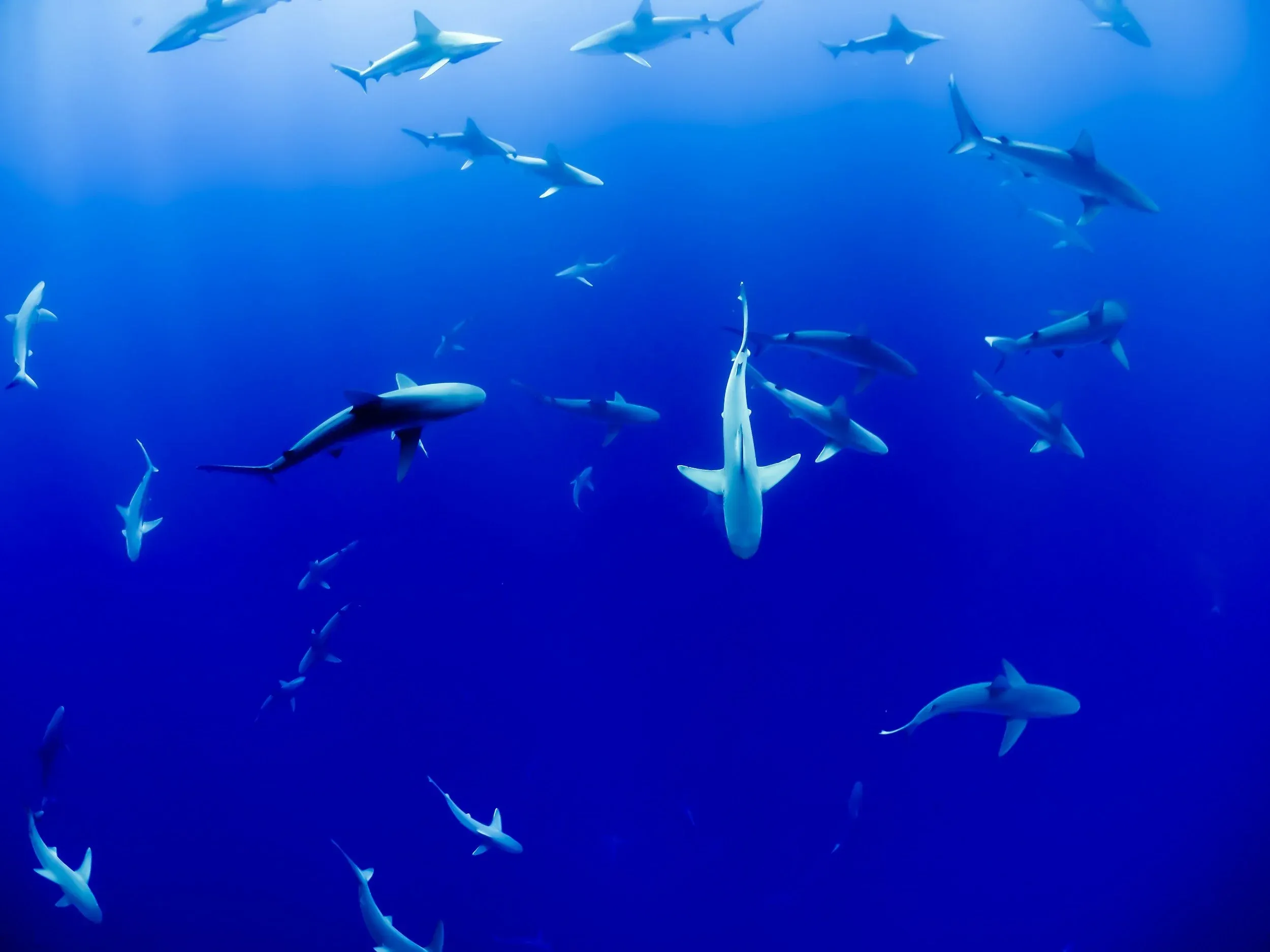
The Red Sea is home to roughly 50 shark species, but the vast majority are small, deep-dwelling, or extremely rare. In the waters around Hurghada, your realistic shark encounters are limited to a handful of species. The most common is the whitetip reef shark — a small, docile shark that grows to about 1.6 meters (5 feet 2 inches) and spends much of its day resting under overhangs and coral heads. You might also see grey reef sharks at deeper dive sites, particularly around 20-30 meters. These are slightly larger (up to 2.5 meters) and more curious, but equally uninterested in divers. Hammerheads occasionally cruise the deeper blue, but sightings are uncommon and typically fleeting.
The sharks you won't see (unless you go looking)
The big-name sharks of the Red Sea — oceanic whitetips, tiger sharks, great hammerheads, silky sharks, threshers — are pelagic species that live in open water or far south of Hurghada. They're found at specialized liveaboard destinations like the Brothers Islands (May-June is peak season for oceanic whitetips and threshers), Daedalus Reef (famous for hammerhead schools), and Elphinstone Reef. If you're a shark enthusiast, these are world-class destinations and we run expeditions down there several times a year. But they require liveaboard trips and a higher level of diving experience.
Shark behavior: Why they're not interested in you
Sharks hunt by instinct built over millions of years of evolution. Their prey — fish — have specific movement patterns, sizes, and electrical signatures that trigger a feeding response. You, on a scuba tank, moving slowly and deliberately, emit none of these triggers. In fact, the moment you bubble-breathe or move toward a shark, it typically takes that as a signal that you're large, unfamiliar, and potentially dangerous. Sharks are not mindless eating machines; they're actually cautious and curious creatures that avoid unnecessary conflict. A whitetip reef shark will hide from you. A grey reef shark will watch you with interest but maintain distance. Aggression simply isn't a shark's default response to divers.
Why dive guides love sharks
To a professional dive guide, spotting a shark on a dive is a gift. It means the reef is healthy, thriving, and biodiverse. Sharks are an indicator species — their presence signals a functioning ecosystem. Guides will actually try to show you sharks because they're a privilege to witness, not a threat to avoid. If your guide says 'I saw a whitetip under that coral,' they're sharing something special, not warning you of danger.