
Are There Sharks in the Red Sea? Every Species, Where They Live & How Safe You Are
Yes — around 40 shark species live in the Red Sea, and that's exactly why divers cross the planet to get here. Here's every shark you might actually meet, where each one lives, and what the safety numbers really say about swimming and diving with them.
The quick answer
The Red Sea is home to roughly 40 shark species — from palm-sized bottom dwellers to whale sharks longer than a bus. Most of them live far offshore, deep, or both, and will never come near a resort beach. The handful you might actually meet on a reef are shy, small and completely uninterested in people. And the numbers back that up: millions of people swim, snorkel and dive the Egyptian Red Sea every year, and shark incidents average less than one per year. Statistically, the drive to the marina is the most dangerous part of your dive day. We wrote a whole article on Hurghada shark safety specifically — this one is the bigger picture: who actually lives out there, and where.
Whitetip reef shark — the one you might actually see
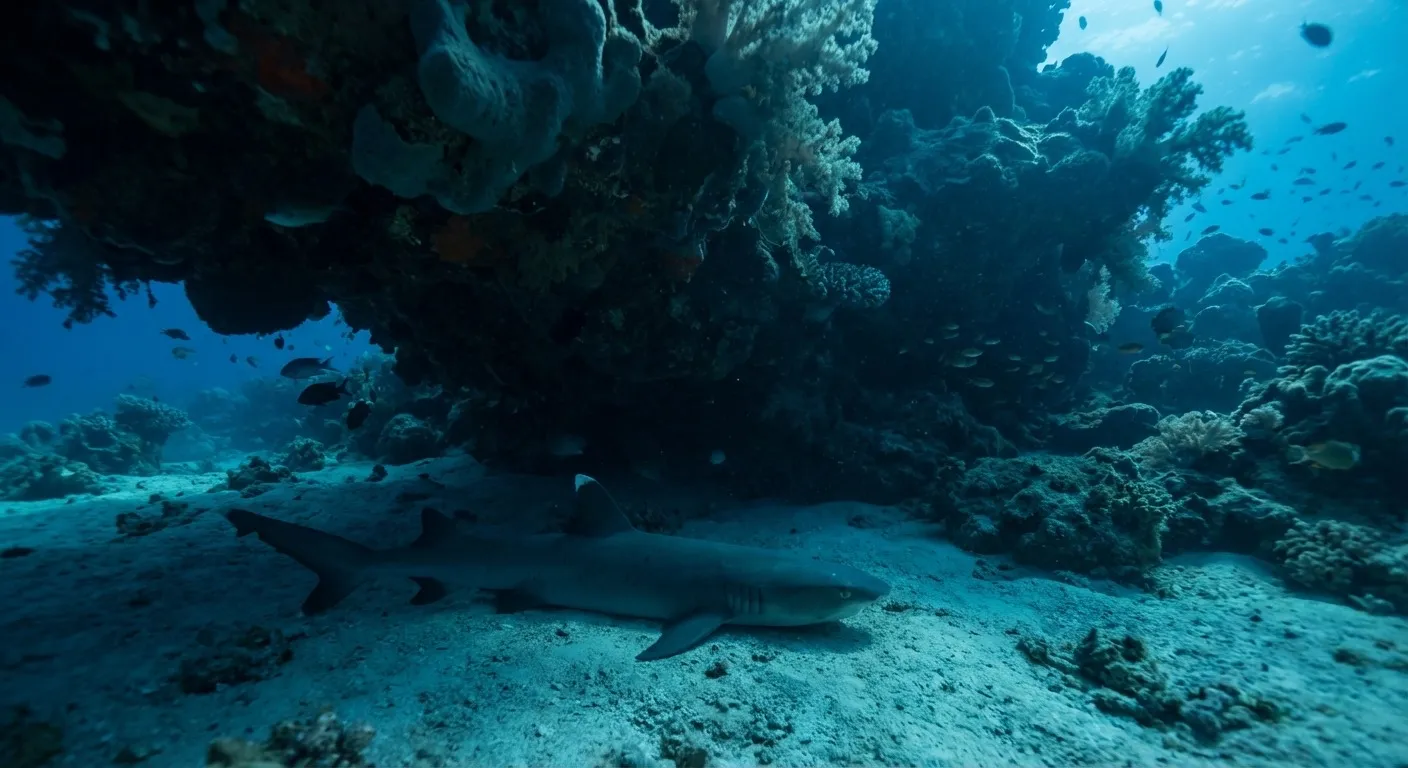
If you meet a shark on a Hurghada reef, it will almost certainly be a whitetip reef shark: about 1.5 metres, slender, with unmistakable white tips on its fins. It spends the day resting under table corals and in caves — divers usually find one snoozing, not swimming. It has never been responsible for a serious attack on a human in the Red Sea. Seeing one is a good day, not a bad one.
Grey reef shark — the outer-reef patroller
Grey reef sharks patrol the steep outer walls and current points — places like the outer Giftun reefs and further offshore. They're curious from a distance but keep well clear of bubble-blowing divers. In thirty years of mass tourism they have essentially no record of unprovoked incidents with divers in Egypt.
Hammerheads — the summer deep-water bonus
Scalloped hammerheads school in the cool, deep water off offshore reefs in summer. Divers plan whole trips around them — they are frustratingly shy, and getting within camera range takes luck and depth. They are plankton-rich-water hunters of fish and squid, with virtually zero interest in humans.
Whale shark — the harmless giant
The biggest fish in the ocean visits the Red Sea in late spring — sightings peak roughly May to July. It eats plankton, couldn't bite you if it wanted to (its throat is the size of a grapefruit), and swimming next to one is a bucket-list moment. Sightings near Hurghada are rare but real; check the best time to dive Hurghada if a whale shark is on your wish list.
Oceanic whitetip — the honest conversation
The oceanic whitetip (Carcharhinus longimanus) is the species behind most of the Red Sea headlines you may have read. Two things are true at once: it is a bold, opportunistic open-ocean shark that deserves genuine respect — and it lives offshore in deep blue water, mostly around the far-southern reefs like the Brothers and Elphinstone, not on the sheltered coastal reefs where day trips and courses happen. Encounters near Hurghada's reefs are rare. Where oceanics are known to appear, guides brief specifically for them, groups stay together, and dives are managed accordingly. The incidents that make headlines have overwhelmingly involved swimmers and snorkelers at the surface — where a shark can mistake silhouettes for prey — not scuba divers on the reef.
Tiger, mako and the rest of the deep-water cast
Tiger sharks, silky sharks, threshers and makos all cruise the Red Sea — almost entirely far offshore, deep, or following the open-water fish schools. Grey nurse and leopard sharks rest on remote sandy bottoms. For a diver on a Hurghada day boat, these are names on a wish list, not something you plan around.
Where Red Sea sharks live — and where they don't
Think of the Red Sea in three zones. The sheltered coastal reefs — Hurghada's bays, islands and house reefs — are shallow, busy and food-rich for small fish, not sharks: here you'll see whitetip reef sharks and little else. The outer reef walls and drop-offs get grey reef sharks and the occasional passing pelagic. And the remote offshore seamounts — the Brothers, Daedalus, Elphinstone, reached by liveaboard — are where the oceanics, hammerheads and silkies actually live. That geography is the single most important thing to understand about Red Sea sharks: the dramatic species and the tourist beaches are, almost always, tens of kilometres apart.
How dangerous are Red Sea sharks, really?
Egypt's Red Sea coast hosts millions of visitors a year. Confirmed shark incidents average out to less than one per year — and the overwhelming majority of those involved swimmers or snorkelers at the surface, often near deep water or where fish waste had been dumped. Scuba divers, down on the reef and blowing noisy bubbles, are the group sharks avoid most. For perspective: worldwide, sharks are responsible for around 5-6 fatalities a year across all oceans. Sunbeds, jet-skis and dehydration are all statistically more dangerous parts of a Red Sea holiday. None of this is to dismiss the rare tragic events that do happen — it's to size them correctly against tens of millions of safe swims.
Why divers hope to see them
A reef with sharks is a healthy reef — they're the sign the whole food chain underneath is working. Red Sea shark populations face far more danger from us (finning, longlines, plastic) than we ever have from them, and several species here are threatened. Diving with them, respectfully, is one of the strongest arguments for protecting them. If sharks are why you dive — or why you've been afraid to start — come talk to us. We'll tell you honestly what you might see, where, and in which season. And if you're brand-new and nervous, a Discover Scuba day with an instructor holding your hand (literally, if you want) is the gentlest possible introduction.
FAQ: Red Sea sharks
Are there sharks in the Red Sea? Yes — around 40 species, from whitetip reef sharks to whale sharks. Most live far offshore or deep; only a few small, shy species visit coastal reefs. Is it safe to swim and dive in the Red Sea? Statistically it's among the safest warm-water destinations on earth: millions of visitors a year, less than one shark incident per year on average. Which sharks live near Hurghada? Almost exclusively whitetip reef sharks, with grey reef sharks on the outer walls. The headline pelagic species live at remote offshore reefs far to the south. What should I do if I see a shark while diving? Stay calm, stay with your group and keep it in view. Don't chase or feed it. Then count yourself lucky. When can you see whale sharks in the Red Sea? Sightings peak roughly May to July. They're rare around Hurghada but do pass through most years.