
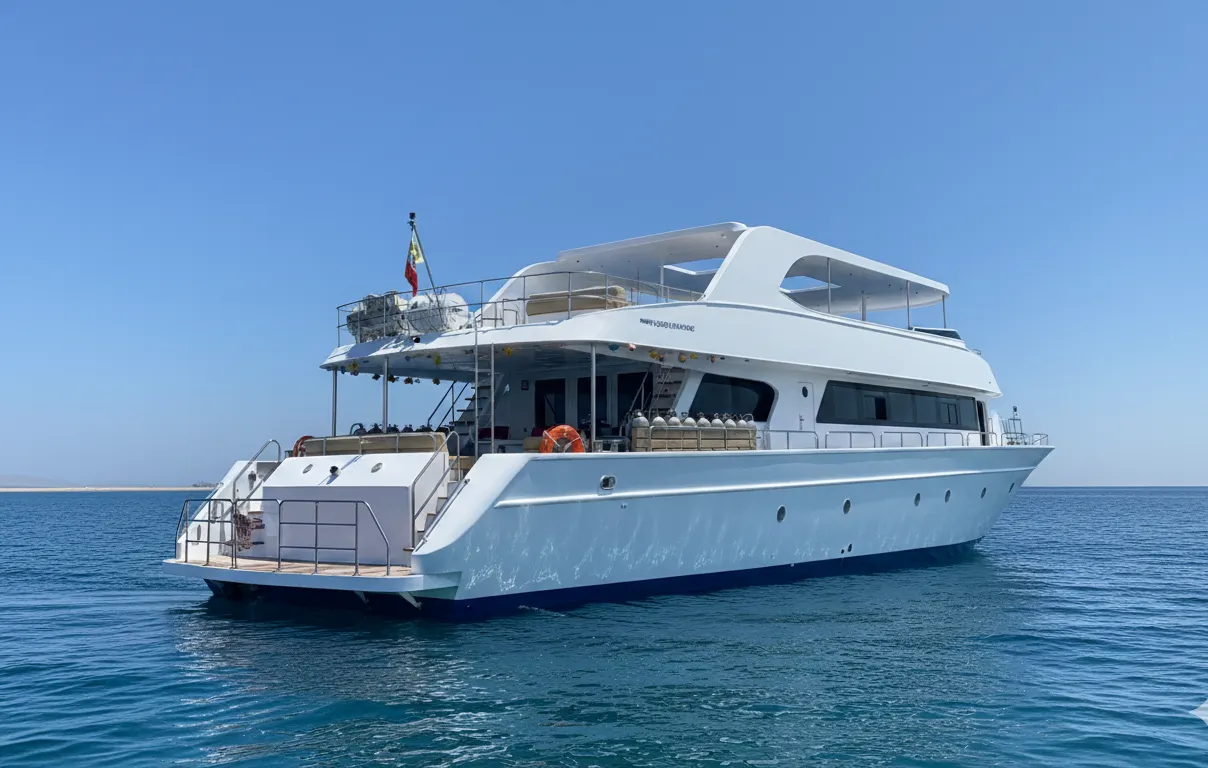
SSI DPV / Scooter Diver
The best-value way to get certified in Hurghada.
- Duration
- 2 days
- Training dives
- 4
- Maximum depth
- 30 m
- Group size
- Max 3
- Minimum age
- 12+
- Languages
- English · Arabic · German
Why take DPV / Scooter Diver with SSI?
Learn with SSI in Hurghada using free digital learning materials, the same experienced instructors and the same Red Sea training dives — usually at our lowest agency price.
Choose SSI for excellent value, flexible digital learning and strong recognition worldwide. Your course includes the same local expertise, equipment, boat logistics and safety standards as our other agency options.
Day by day.
A clear, calm progression from theory and confined-water skills to confident Red Sea dives.
- 1 Day 1
Theory + first DPV dives
Theory on DPV operation, safety, and emergency procedures. Two dives building familiarity with the scooter, attaching it to your kit, and managing buoyancy at varying speeds.
- 2 Day 2
Range dives
Two dives covering substantial distance — drift along walls, explore offshore pinnacles, and complete a navigation exercise on a scooter.
Everything arranged for your course.
What's included
- DPV rental for both days
- Full equipment
- 4 boat dives
- Hotel pickup
- Hot lunch and soft drinks on every dive day
- Insurance
- Specialty certification
Not included
- Tips (optional)
- Diving camera rental (€20/day)
Skills that stay with you.
- ✓DPV operation and trim
- ✓Battery and runtime management
- ✓Emergency disconnect
- ✓Buoyancy at speed
- ✓Navigation and team formation on DPVs
About SSI DPV / Scooter Diver.
Is this hard to learn?
No — it's mostly fun. The hard part is resisting the urge to go too fast on dive 1.
How fast does a DPV go?
Our recreational scooters cruise around 1.5–2 knots (roughly 3 km/h). Fast enough to cover a whole reef, slow enough to stay in control and watch your buoyancy and buddy.
Do I need my own certification to use a scooter on fun dives?
Yes. Most operators in the Red Sea require the DPV specialty card before renting a scooter for recreational diving. The card is valid for life.
What happens if the battery dies mid-dive?
You disconnect the DPV from your harness and swim back on fins. We teach emergency disconnect and end-of-life battery recognition in the theory session, and we run every dive with reserves that assume a tow home.