
Emergency First Response (EFR)
One day. CPR, AED and full first aid — the most useful certification you can add to your PADI or SDI card.
- Free cancellation up to 24h before
- Confirmed within 3 hours
- Pay on arrival — cash or card
- All equipment included
- Duration
- 1 day
- Total dives
- –
- Max depth
- – m
- Group size
- Max 4
- Min age
- 10+
- Languages
- English · Arabic · German
Choose your certification agency
All agencies are internationally recognised. The difference is price, learning style, and future pathway.

- Most globally recognised certification
- Gold-standard eLearning platform
- Accepted at every dive operator worldwide
Best if you plan to dive at remote destinations where brand recognition matters.
Book PADI
- First agency to teach with dive computers
- Practical, technical, no-nonsense approach
- Direct pathway to TDI technical diving
Best if you are serious about diving and may want to go technical in the future.
Book SDIWhat Emergency First Response (EFR) actually involves
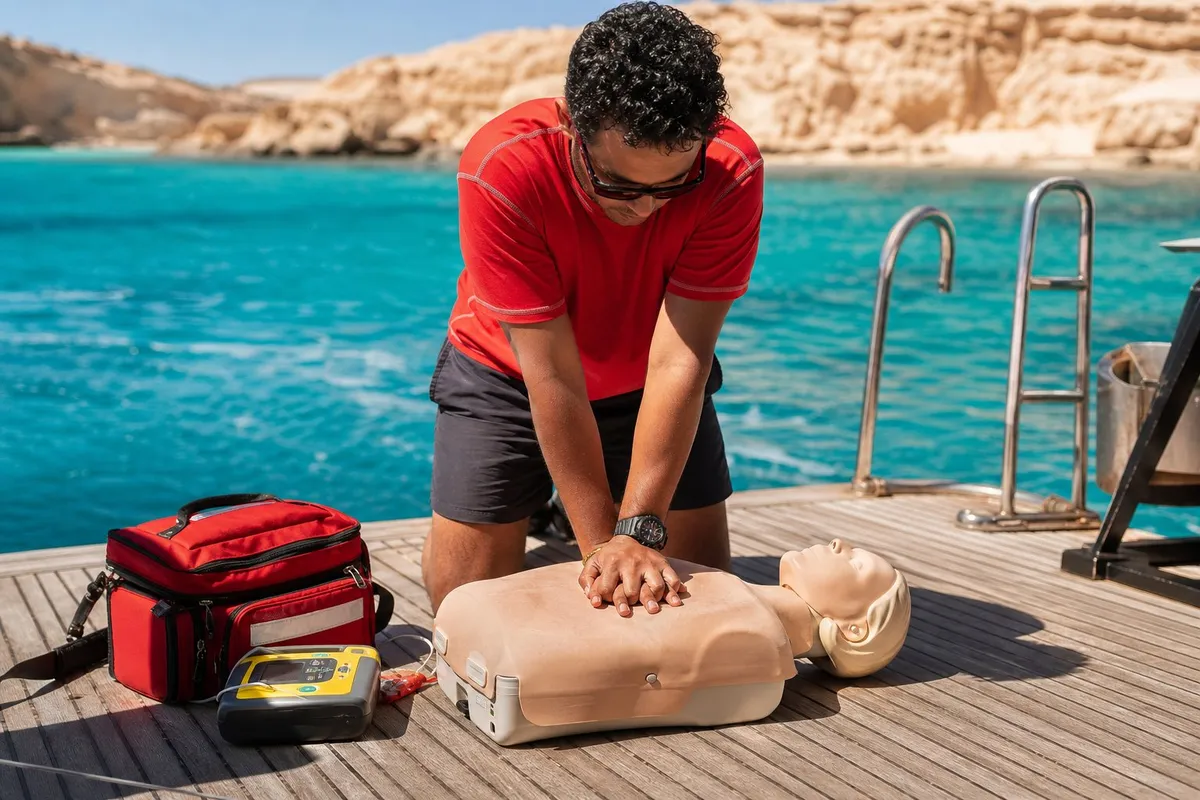
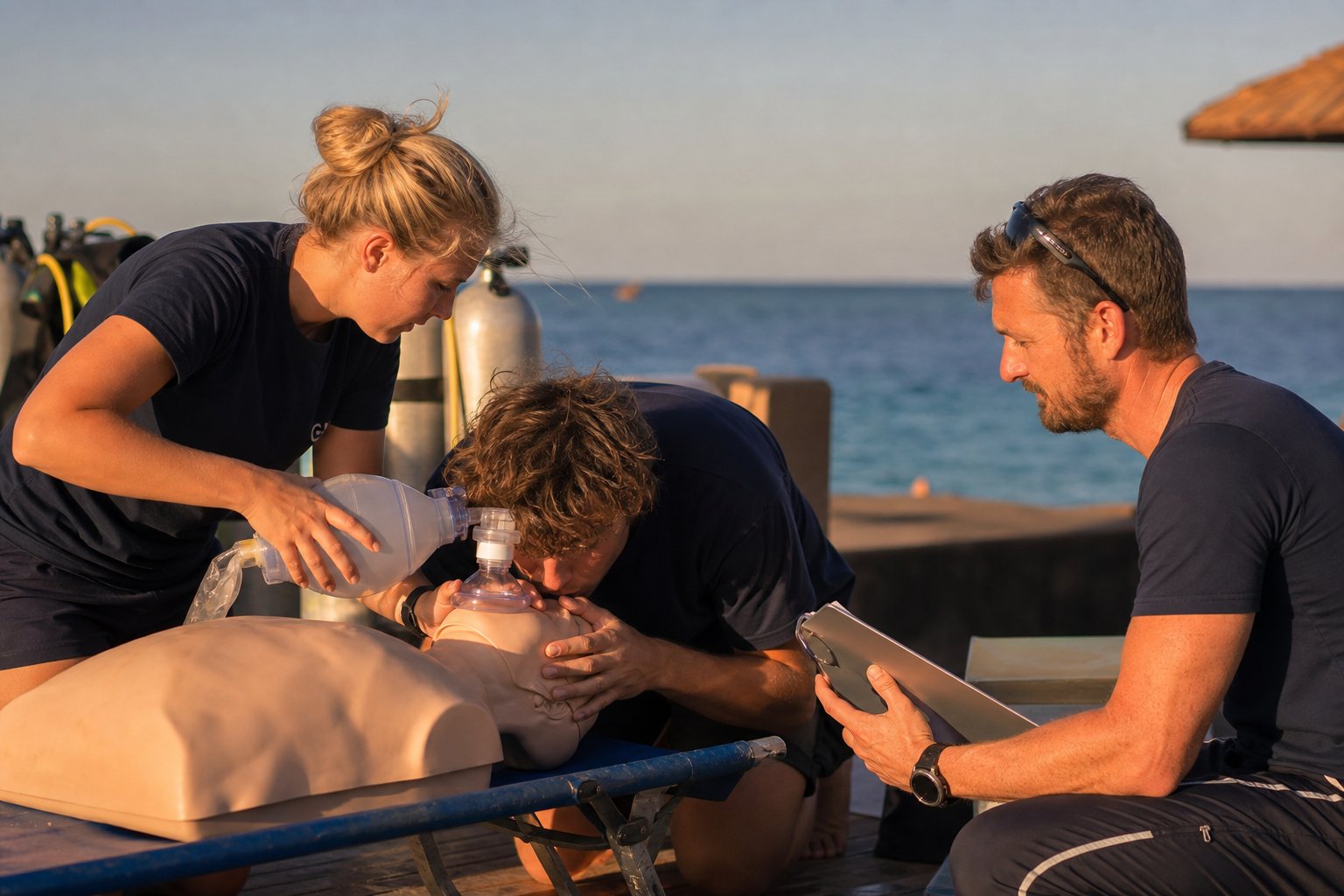
A one-day course that teaches you to act in the first minutes of a medical emergency: high-quality CPR on adults, children and infants, AED use, choking response, bleeding and shock control, burns and fracture care, and emergency oxygen administration. No diving experience and no medical background needed. You train on manikins, real AEDs and a full first-aid kit, then finish with an on-boat emergency scenario. You earn an international EFR certification (PADI or SDI) that is valid for two years and is the prerequisite for the Rescue Diver course.
What EFR actually is
EFR is a two-module certification: CPR — chest compressions, AED and choking for adults, children and infants — and full first aid, including emergency oxygen administration. The whole course takes one day, roughly eight hours of classroom and hands-on practice. There is no diving involved and no medical knowledge assumed: the instructors build everything up from zero, and you spend most of the day doing, not reading. By the end you have repeated each skill until it is automatic — which is exactly what matters when someone is flat on the deck and the phone call is already being made.
PADI EFR vs SDI EFR
| PADI EFR | SDI First Aid | |
|---|---|---|
| Format | Two modules: CPR + First Aid | One combined CPR & First Aid course |
| Duration | 1 day (≈8 hours) | 1 day (≈8 hours) |
| Oxygen administration | Included | Included |
| Certification | PADI EFR card | SDI First Aid card |
| Validity | 2 years — 1-day refresh after | 2 years — 1-day refresh after |
| For Rescue Diver | The standard PADI prerequisite | Accepted as the CPR/First Aid equivalency |
Same skills, same day, same €90 — the difference is the card in your wallet.
It's not just a diving thing
Ask a lifeguard, a sailor or a parent what EFR taught them that they use most, and the answer is rarely diving. The bulk of first aid happens on land: at the beach, at home, in the office, at the dinner table with a foreign object lodged in a throat. One morning of compressions and one afternoon of bandaging makes you the calmest person in any room where something goes wrong — on or off the water.
Your schedule
- 1 Morning — CPR
CPR module
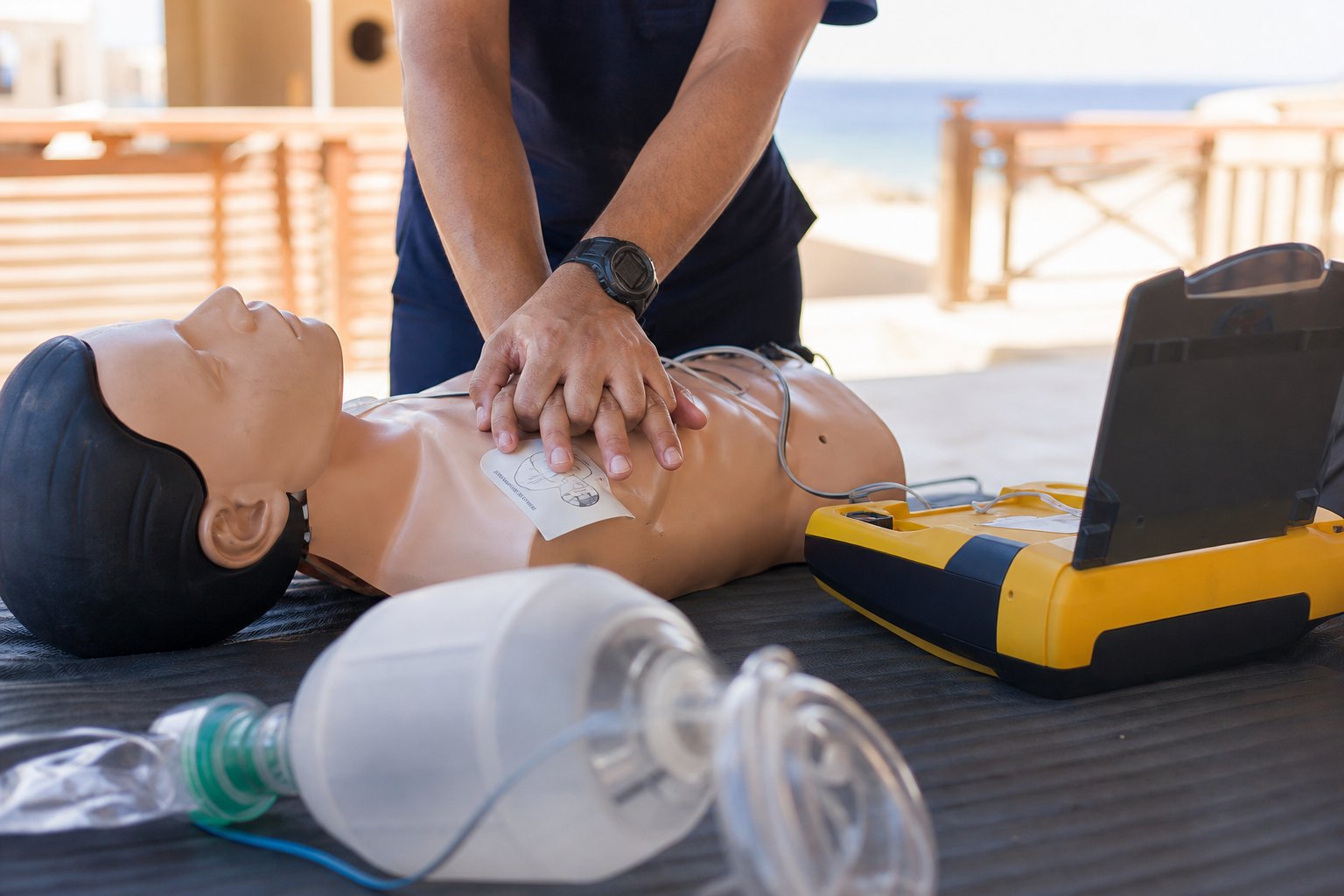
Classroom plus deck: adult, child and infant CPR on manikins, AED operation, and choking response (conscious and unresponsive). You drill compressions until they are automatic, then take a short practical test.
- Adult / child / infant CPR
- AED operation
- Choking response
- 2 Afternoon — First Aid
First aid module
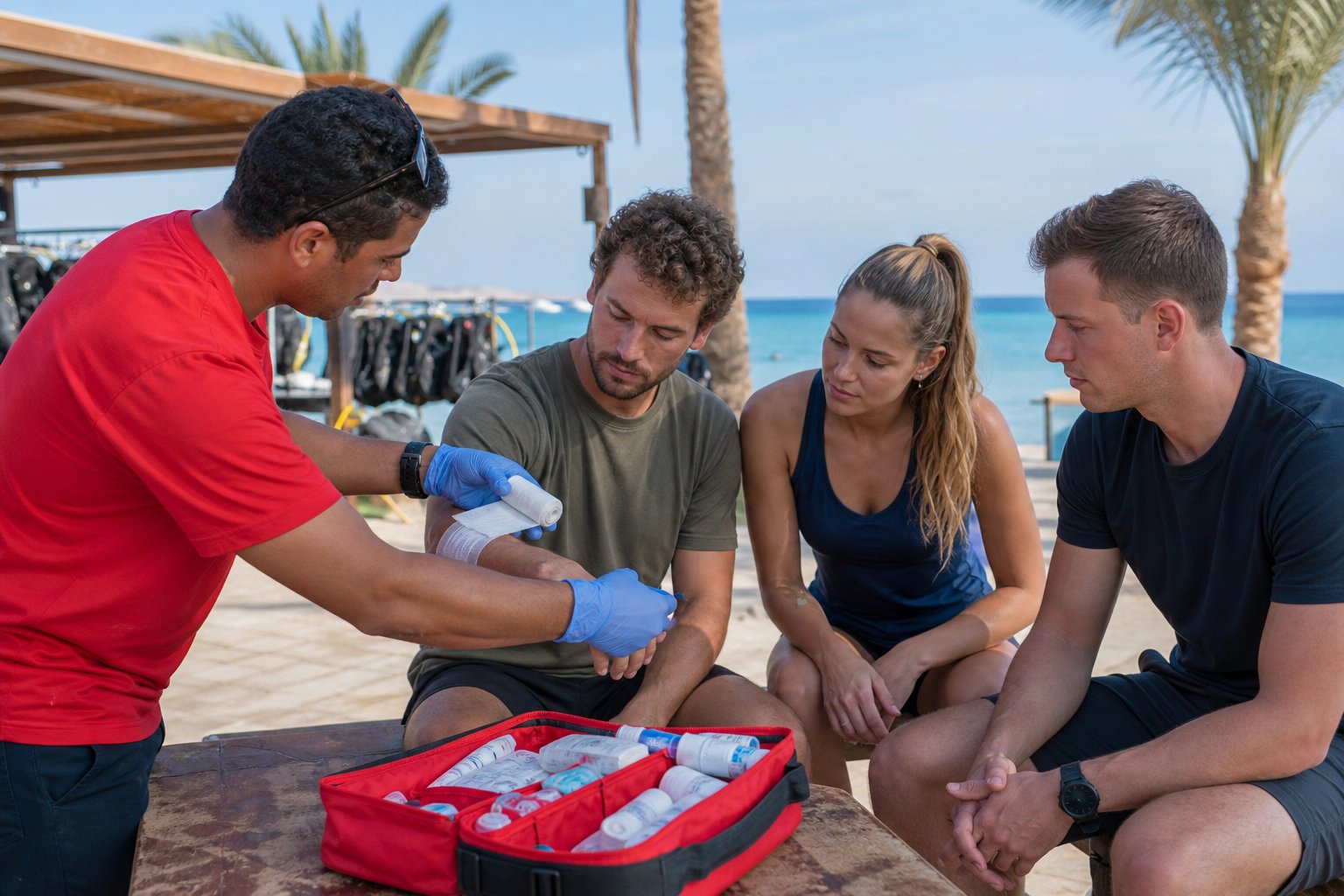
Hands-on first aid with a full kit: severe bleeding, shock, burns, fractures, head and spinal injuries, and emergency oxygen administration. We close with an on-boat emergency-action scenario that ties both modules together.
- Bleeding & shock
- Oxygen administration
- Emergency action plan
What's included (and what isn't)
What's included
- Digital course manual and certification
- CPR training — adult, child and infant (incl. AED)
- Emergency oxygen administration practice
- Hands-on first aid with full kit and manikins
- On-boat emergency action scenario
- Hotel pickup and drop-off
- International EFR certification card
Not included
- Tips (optional)
What you'll be able to do
- High-quality chest compressions — adult, child and infant
- AED operation in a real emergency
- Choking response, conscious and unresponsive
- Controlling severe bleeding and treating shock
- Burns, fractures and spinal-injury care
- Emergency oxygen administration
- Rescue breathing (mouth-to-mouth and bag-valve-mask)
- Building and following an emergency action plan
From the water
FAQ
Do I need to be a diver to do EFR?
No. No diving experience, no medical background, no other certification — nothing. A good share of our EFR students are partners or friends of divers, hotel staff, or travellers who simply want the skill.
How long is the certification valid?
Both PADI EFR and SDI First Aid are valid for two years. After that, a one-day refresh course renews your card — we run it throughout the season, so it takes about as long as a fun dive.
Do I need EFR for the Rescue Diver course?
Yes — a current CPR/First Aid certification is a Rescue Diver prerequisite. If you don't have one, book the EFR day the morning before Rescue starts and we'll run them back-to-back.
PADI or SDI — which should I choose?
Same skills, same day, same price. If the rest of your certifications are PADI, take PADI — the cards stay consistent. If you're an SDI diver, or you're heading toward TDI technical diving, take SDI. Message us on WhatsApp if you're unsure and we'll tell you which fits.
Can my partner or friends join me?
Yes — there is no cap on how many of you can take the course, and the price stays €90 per person. It's one of the few courses you can genuinely do as a couple.
Related courses
Open Water Diver
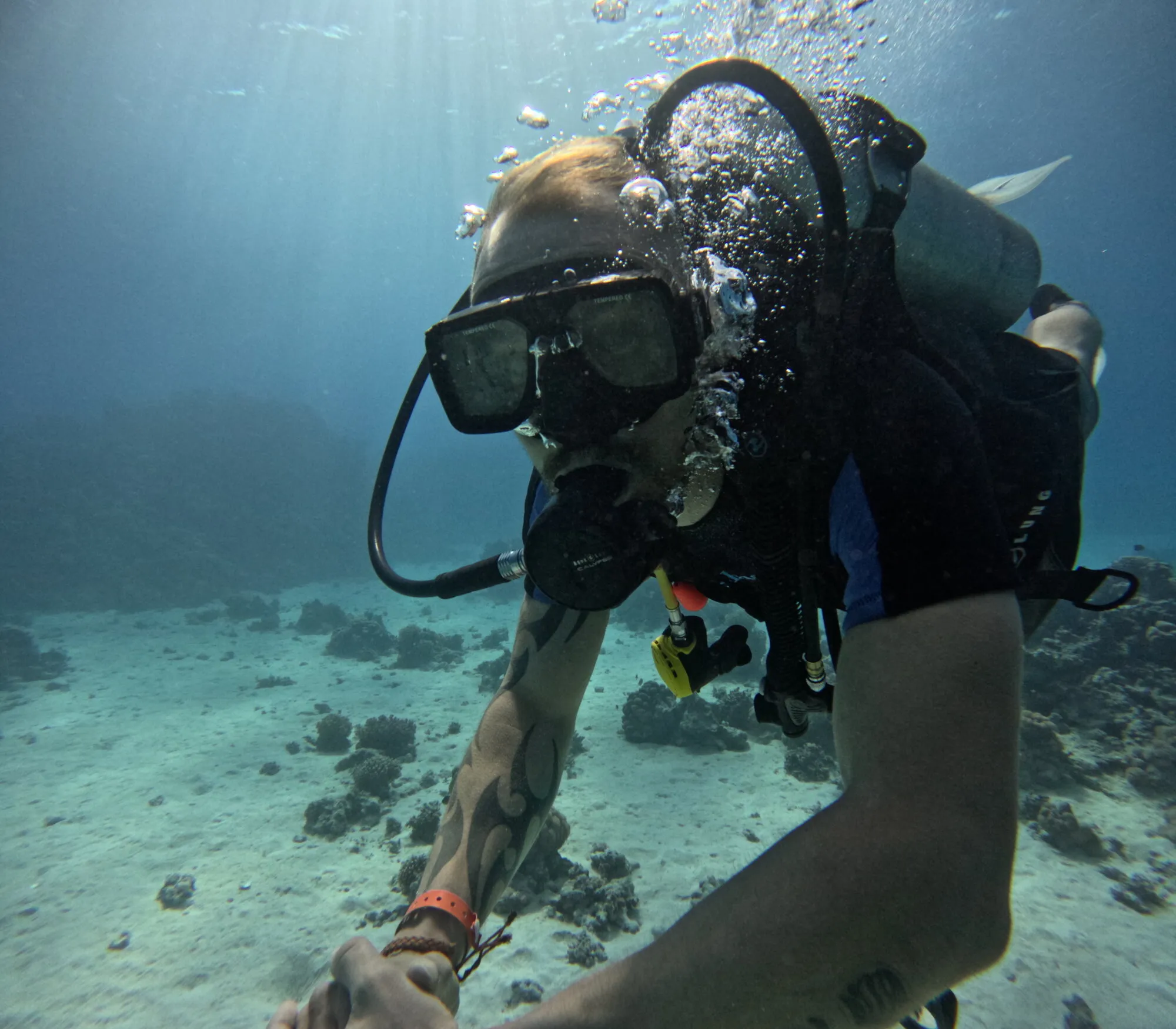
Become a certified diver in 3 days. Lifetime certification, dive anywhere in the world.
Rescue Diver
The course every diver remembers as the hardest — and the most rewarding — they ever took.
What our divers say.
Sound right?
Message us on WhatsApp with your dates — no deposit, no commitment.