
Beginner's Guide to Diving Hurghada in 2026
Everything a first-time diver needs to know about getting certified in the Egyptian Red Sea — from cost to course choice to what to expect on day one.
Why Hurghada is the perfect place to learn
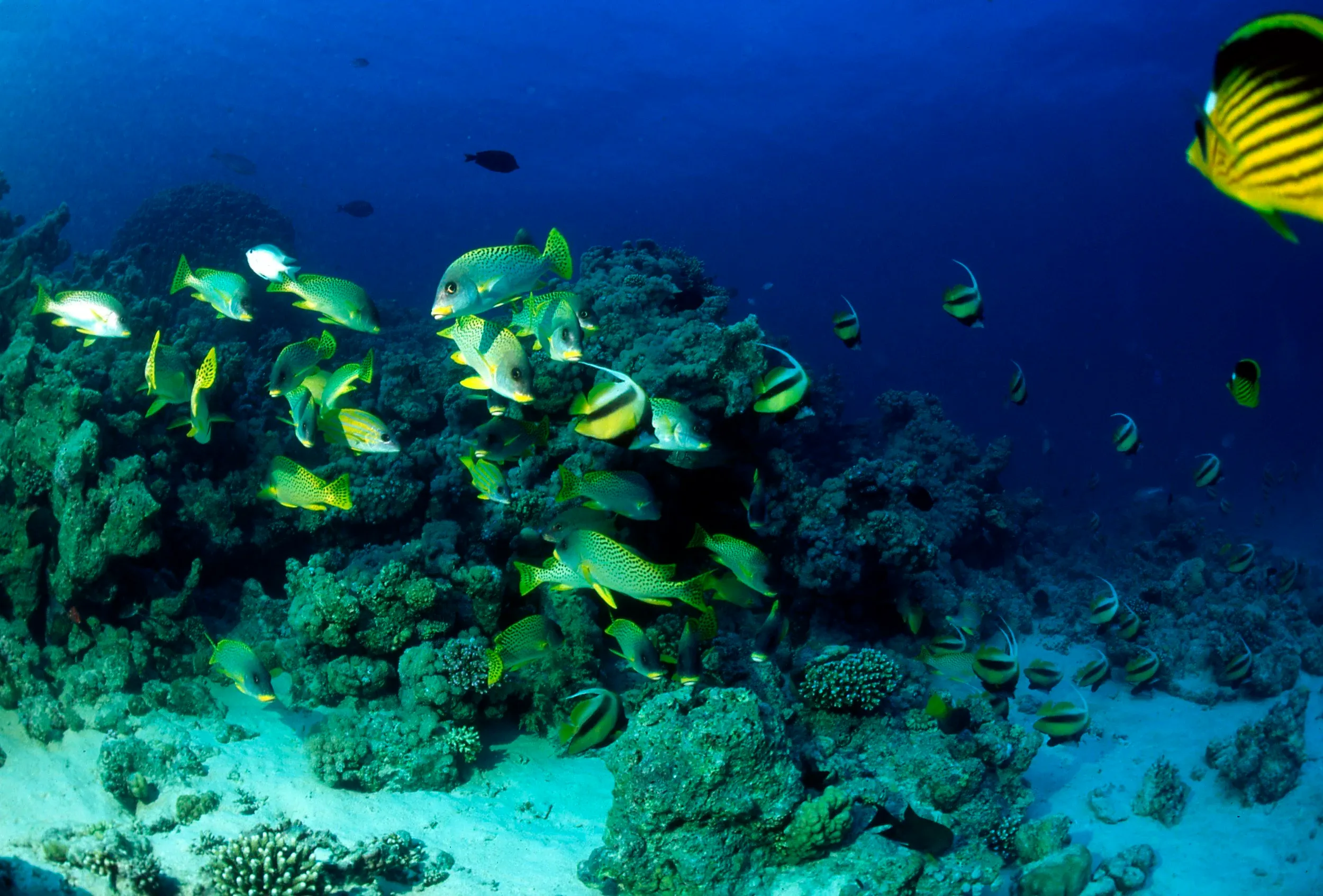
If you've decided 2026 is the year you finally learn to scuba dive, you've made a great decision — and you should seriously consider Hurghada. There are very few places in the world that combine all four factors that make beginner diving ideal: warm water (24-28°C year-round), easy accessible reefs, affordable costs, and the kind of marine life that turns first-timers into lifelong divers. The Caribbean is more famous, Southeast Asia has cheaper flights, but the Red Sea consistently ranks in the global top 5 dive destinations and is the most beginner-friendly of them all. Water visibility is excellent (20-30+ meters), currents are generally mild, and the reefs start in shallow water so your first training dives are relaxed and confidence-building.
Do you have what it takes?
Spoiler: probably yes. You don't need to be a strong swimmer or in peak fitness. You just need basic swimming ability (you should be able to swim 200 meters unaided without difficulty), reasonable general health, and the ability to follow instructions. The medical questionnaire weeds out only serious cardiovascular or respiratory conditions. If you can swim, you can learn to dive. Age is irrelevant — we've certified divers from 12 to 80 with equal success. Many of the best students are people who felt out of shape on land but discovered they come alive underwater.
Practical requirements before you book
- Basic swimming ability (200 m unaided, no fins)
- General health — medical form will flag anything concerning
- 3-4 days available during your holiday
- Passport with 6+ months validity
- Budget: €400-500 for the course, €50-100 for meals/coffee between dives
- Willingness to do online eLearning before arrival (2-3 hours)
Course options: PADI, SSI, or SDI?
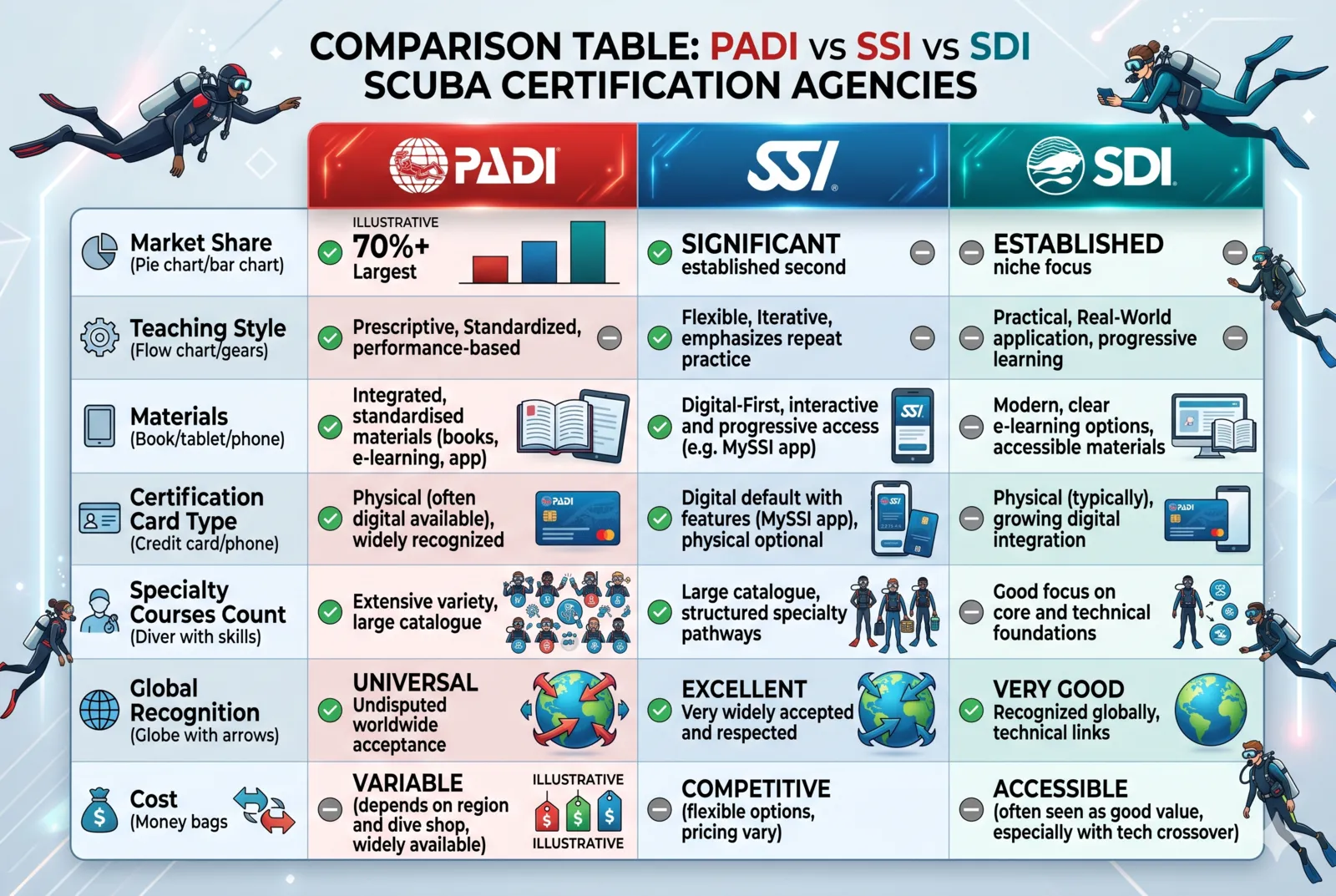
The three major diving certification agencies — PADI, SSI, and SDI — all offer entry-level courses that are internationally recognized. The syllabus is essentially identical (basic physics, equipment, safety, four training dives), and the final certification card is equally valid worldwide. The difference is mostly in teaching style and logistics. PADI is the largest and most recognized globally; SSI focuses on digital learning and personalization; SDI is similar to PADI but with slightly different emphasis. For beginners, the agency matters far less than the instructor. Find a school with good reviews, experienced instructors, and small class sizes. We offer all three — it's entirely your preference.
What the Open Water course actually involves
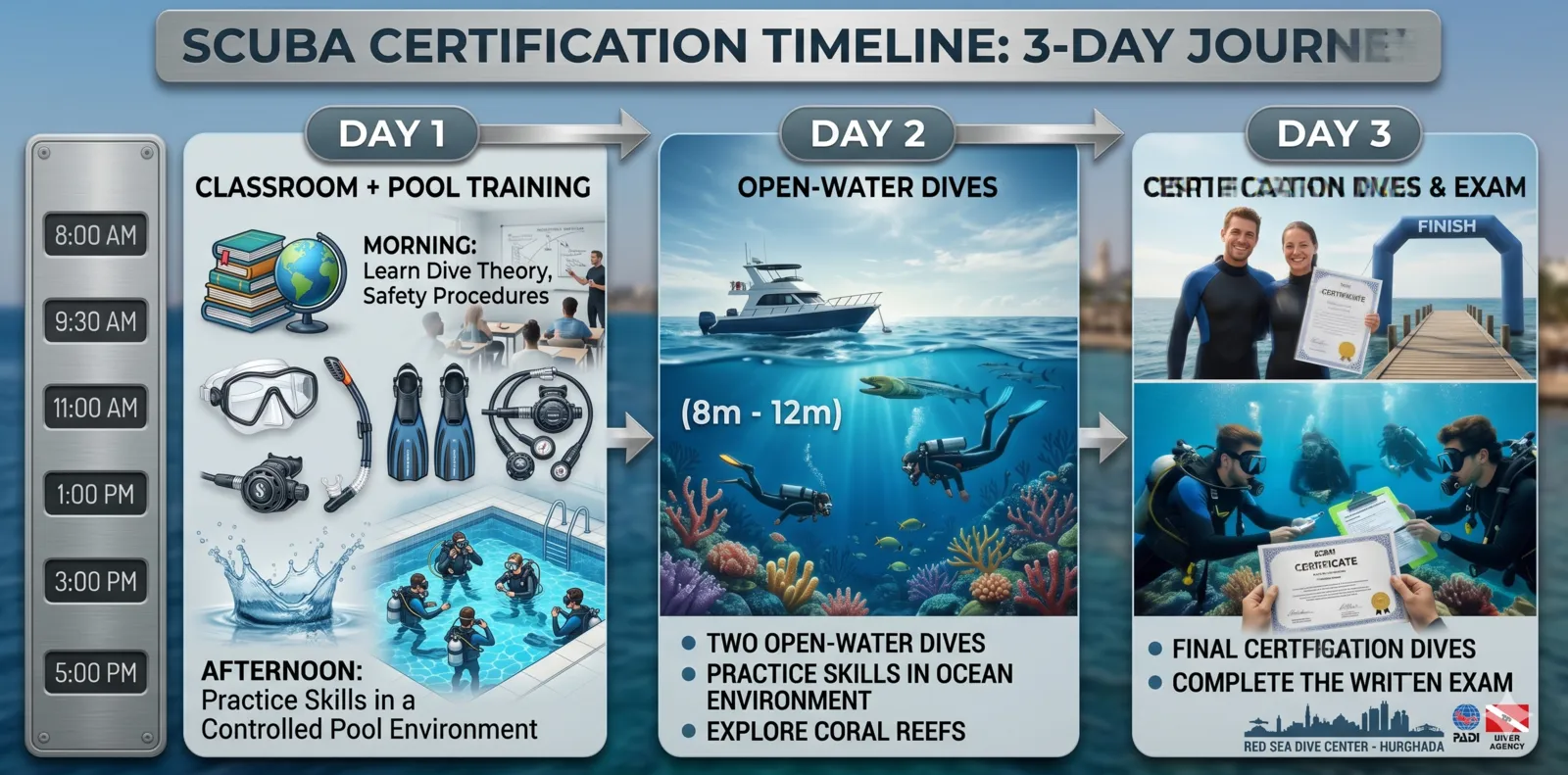
A typical 3-day Open Water certification looks like this: Day 1 — you complete the online eLearning theory (8 hours of videos and quizzes, best done before you arrive), then do three shallow confined-water training sessions in a protected bay where you learn essential skills: clearing your mask, recovering a regulator, controlled ascents. Day 2 and 3 — two open-water training dives per day on real reefs at 8-12 meters. During these dives you demonstrate the skills you learned and practice emergency procedures in a real underwater environment. Your instructor stays with you the entire time. By the end of day 3, you're a certified Open Water Diver, qualified to dive to 18 meters with a buddy anywhere in the world. The sensation of breathing underwater never gets old.
What your first dive feels like
Nervous? That's normal — and it passes instantly. You'll start in a few meters of water where you can stand up if you need to. Your instructor demonstrates each skill first; then you try it. The moment you take that first breath underwater, fear typically vanishes and curiosity takes over. You realize you're breathing, the equipment works, and gravity doesn't exist down here. By the end of the first 15 minutes most students are relaxed and smiling (as much as you can smile through a regulator). By the end of the first dive, you're usually already planning your next one.
Cost breakdown
The Open Water course costs €400-500 and includes instruction, certification, use of tanks and weights, and boat fees. What's NOT included: wetsuit rental (€10), equipment rental beyond tanks and weights like BCD/regulator/fins (€10), and meals/coffee. Budget an extra €50-100 for the course duration. After certification, fun dives cost €50-70 depending on location and duration. Many students add a second dive immediately after certification — it's the smart choice because your skills are fresh and you're motivated.
What happens after you're certified?
Congratulations, you're a diver. Your Open Water card is valid for life and recognized worldwide. Next, you'll probably want to do more fun dives on our local reefs to build confidence (try Advanced Open Water afterward if you want to dive deeper and explore more sites). Many students become dive trip enthusiasts, booking weekend trips to the Brothers Islands or Egyptian Riviera. Others settle into regular Hurghada diving and never leave. The point: getting certified opens a completely new world.
Easy sites we love for new divers
Your first Hurghada dives will likely happen on forgiving reefs like El Fanous — table corals, resident turtles — or the bright coral garden of El Aruk Giftun.
More from the blog
 training
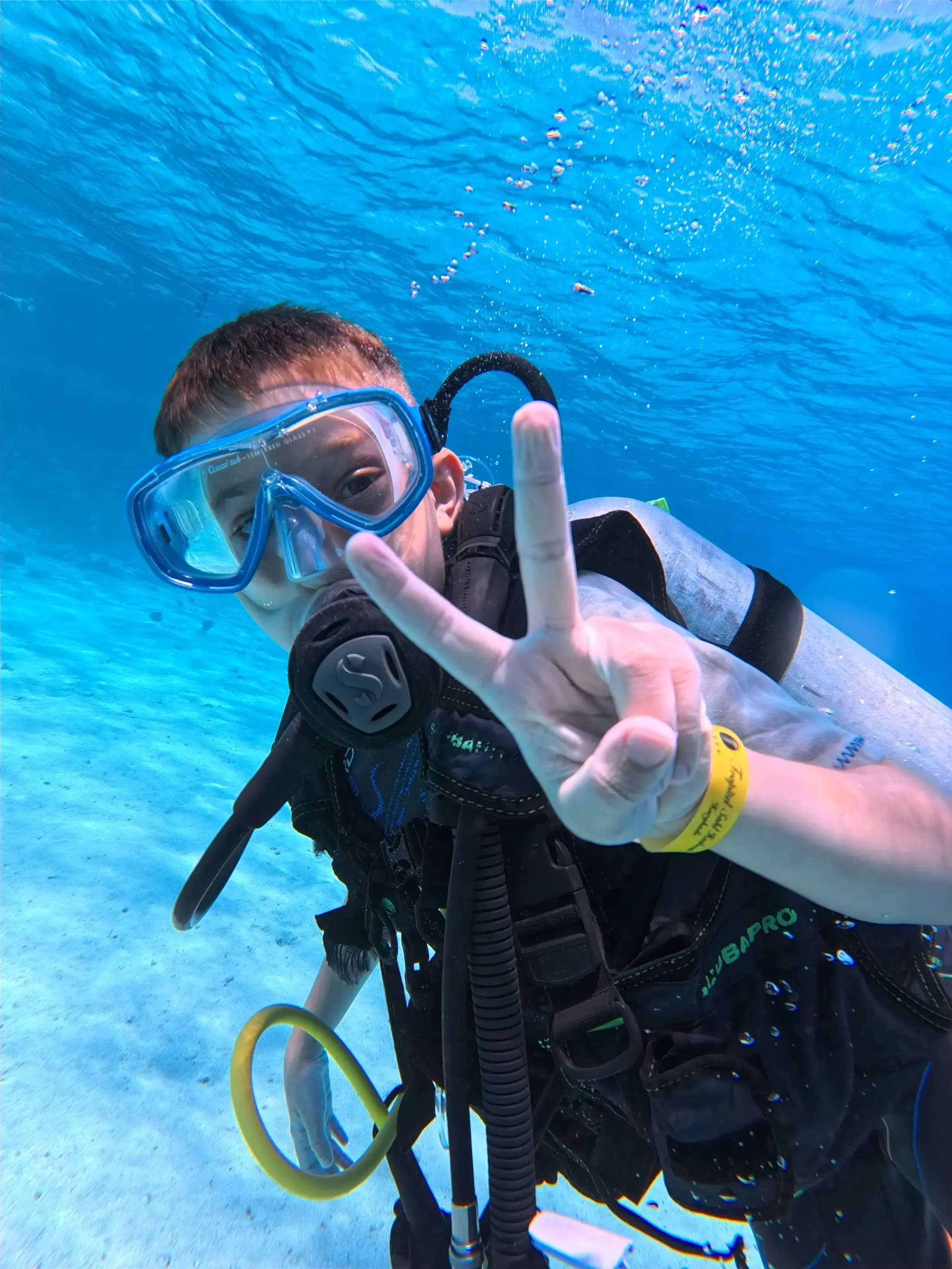
 Kids Scuba Diving in Hurghada — How Young is Too Young?
Everything parents need to know about certifying kids in the Red Sea. Age requirements, course types, safety practices, and how to know if your child is ready.
 training
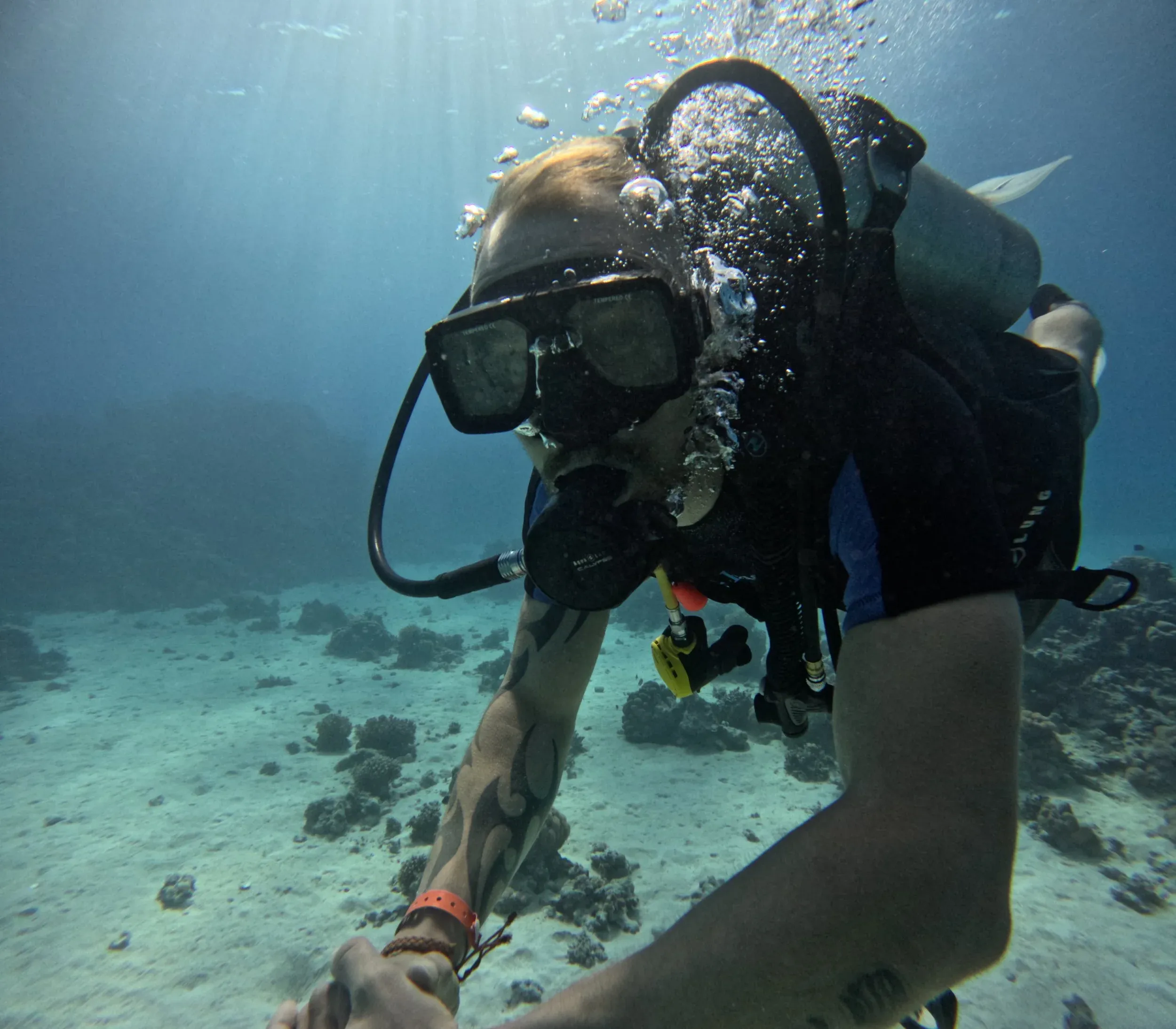
 Open Water Course in Hurghada: 2026 Price, How Many Days & What's Actually Included
The honest buyer's guide to getting scuba certified in Hurghada: what an Open Water course really costs in 2026, how many vacation days you need, the hidden fees cheap offers don't mention — and how to choose a school you'd trust at 18 metres.
 training
 PADI vs SSI vs SDI — Which Diving Certification Should You Get?
Unbiased comparison of the three major diving agencies. Curriculum, recognition, teaching style, and which is best for you.