
When is the best time to dive Hurghada?
A month-by-month guide to water temperature, visibility, marine life, and crowds in the Egyptian Red Sea — and which months we'd actually choose if we could only dive Hurghada once.
The short answer
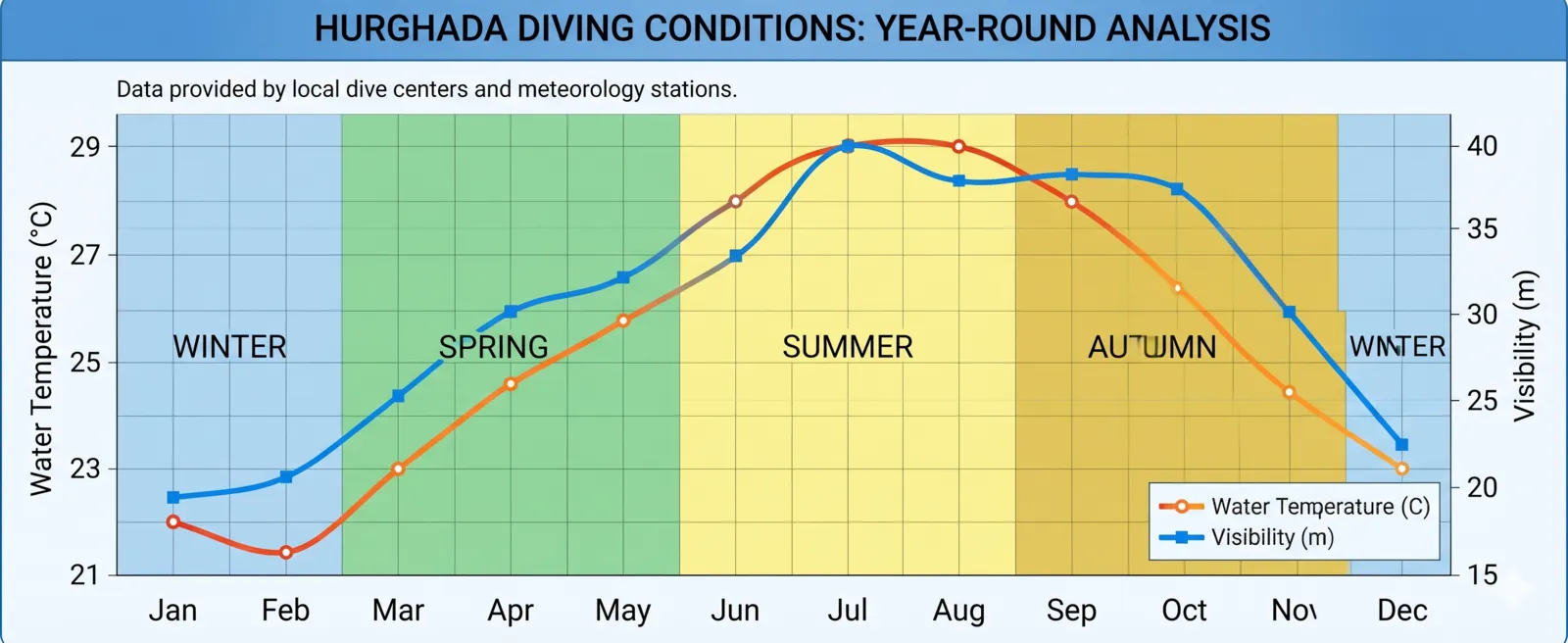
Hurghada is a legitimate year-round dive destination — there is genuinely no bad month. Water temperature ranges from 21°C in February to 29°C in August, visibility averages 20-30 meters consistently, and the wind patterns are far more predictable than in many tropical destinations. Over 330 days per year are sunny and diveable. That said, there are real differences between seasons, and if you're booking a holiday based on a single trip, knowing the nuances will help you choose your perfect month.
Spring (March – May) — Warm-up season
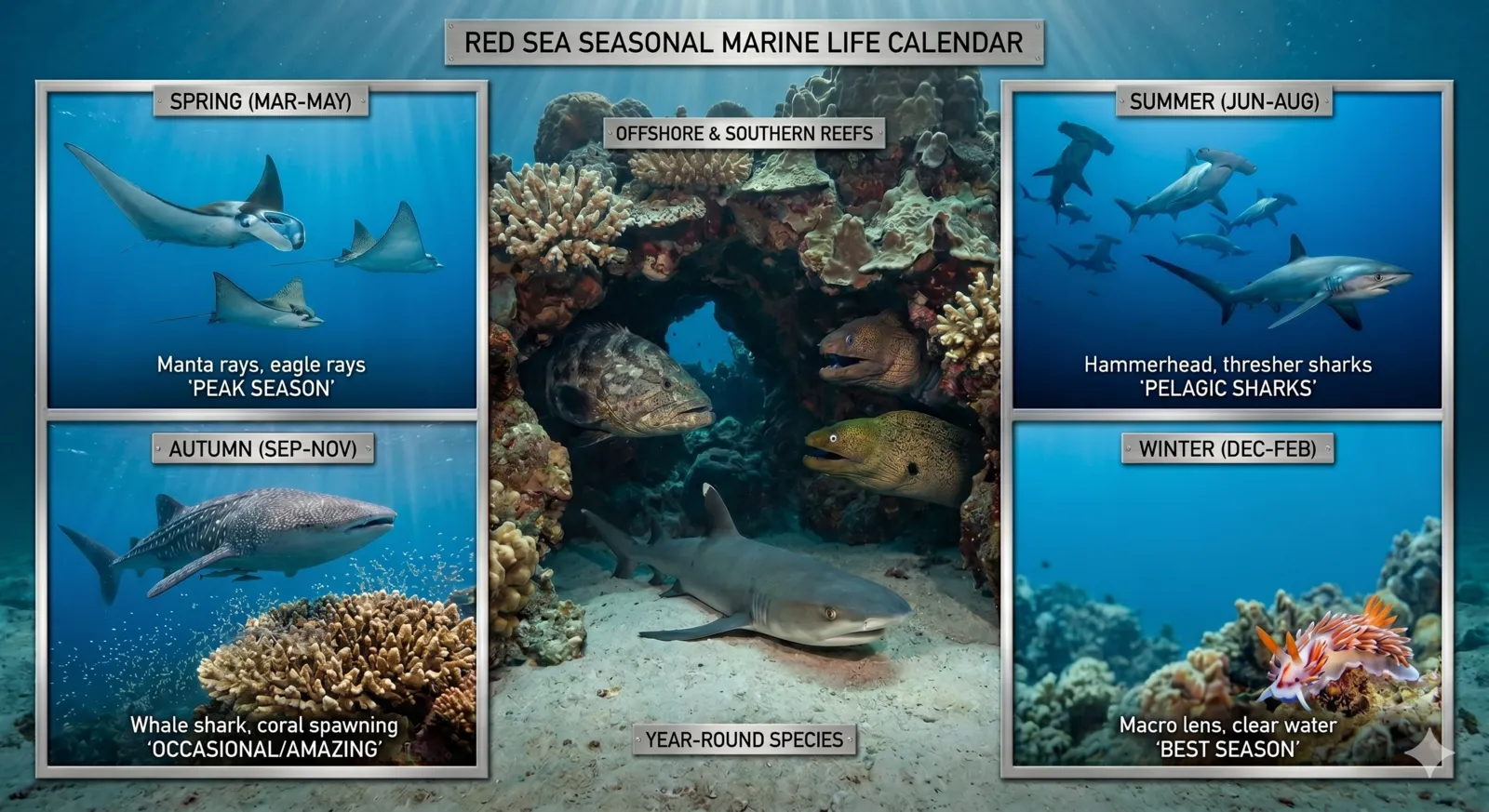
This is many instructors' favorite season. Water warms from 22°C in early March to 25-26°C by May. The wind is light and predictable, boat rides are smooth, and the reefs begin their seasonal feeding burst. March is manta and eagle ray season at Abu Ramada and the nearby house reefs are swarming with juvenile fish as plankton blooms arrive from the Gulf of Aqaba. Visibility is excellent (25-30+ meters). Crowds are moderate — you avoid the summer peak but still get warm water. Prices are reasonable. Pack a 5mm wetsuit for early March, 3mm by May. Best for: families, photographers, anyone wanting the perfect balance of comfort and natural activity.
Summer (June – September) — The peak
Warmest water of the year (27-29°C means minimal thermal protection, many divers wear just a 1mm rash guard), longest daylight (sun rises before 5 AM, sets after 8 PM), and the calmest sea state. The trade-off: higher prices, more crowds, and Egyptian summer heat on land (40°C+ is not uncommon — sun protection is critical). The visibility can get slightly hazy some days as the water stratifies, but it's still a solid 20-25 meters most times. This is also the prime window for southern Red Sea liveaboards (Brothers, Daedalus, St. John's, Elphinstone) where the pelagic action is guaranteed — oceanic whitetips, hammerheads, threshers, and giant trevally. Best for: people who want warm water and don't mind crowds, liveaboard expeditions, strong swimmers who want minimal equipment.
Autumn (October – November) — The sweet spot
Late October and November are arguably the best months of the year, and most divers don't realize this. Water is still warm (25-27°C) but beginning to cool, which ramps up the plankton bloom and brings in predators. The ocean swells die down, winds drop dramatically, and crowds thin out just as prices start falling from the summer peak. Visibility climbs back to 30+ meters. Late September and October mark the start of whale shark season (primarily further south but occasionally in northern Red Sea). November specifically is when the hard-coral spawning event occurs — one of the ocean's most remarkable phenomena — though this happens mostly at deeper sites or during specific tidal windows. This is also a great month for day-trip liveaboards to the southern sites as the weather is perfect. Best for: people wanting the full diving experience without compromise, photographers, anyone wanting value and quality simultaneously.
Winter (December – February) — The clear-water season
The coolest months (water drops to 21-23°C). A few days each month bring cold northwesterly winds that can shut down access to the more exposed sites like Daedalus or the shallow house reefs — but sheltered sites like Abu Hashish or Erg Somaya remain diveable. The upside is remarkable: the nearshore reefs become absolutely pristine because the cold water and weather limit summer turbulence. Visibility at shallow sites (5-12 meters) can exceed 40 meters. The hard-coral spawning event happens in winter (usually triggered by full moons in January/February/March), and macro photography is outstanding. Crowds are lighter, prices are lowest of the year, and the land weather is perfect (20-25°C, sunny, no heat stress). Pack a 5mm wetsuit plus a hood — the initial shock of cold water is real but you warm up quickly once moving. Best for: macro photographers, coral enthusiasts, budget-conscious divers, people fleeing northern winter who want to dive in comfort and clear water.
Pricing patterns throughout the year
Expect peak prices June-August (summer holiday season) and December-early January (holiday break). Spring (March-May) is moderately priced and popular. Autumn (October-November) offers the best value — same-quality diving as summer but 20-30% cheaper. Winter (January-February) is the cheapest period outside of summer holidays, and most instructors agree it's underrated.
Match the season to a site
Chasing dolphins? Shaab El Erg delivers year-round. Visiting in the cooler months? That is prime time for sharks at Careless Reef. Whatever month you pick, our daily diving trips in Hurghada run year-round — and you can get certified any time of year.
More from the blog
 guides
 Freediving in Hurghada: An Honest AIDA Guide
What it's actually like to learn freediving in the Red Sea — the real conditions, the wall every freediver hits at 20 metres, and which AIDA level is right for you. Written by the team that teaches it.
 guides
 Private Diving vs Group Dives in Hurghada — Which Should You Choose?
Full comparison of private dives and group trips in the Red Sea. Cost, benefits, when each makes sense, and how to get the most from either option.